
What is the relationship between the myth of growth, exploitation of environmental resources, poverty and gender roles? We discussed this with Naila Kabeer, feminist economist at the London School of Economics, starting from a new language capable of naming the connections between bodies, money and nature
The myth
of growth
Thinking of economics as an aggregate of categories and models for analysing and understanding the world and its dynamics – before even attempting to steer them – also means acknowledging that a feminist approach can help us reconsider established perspectives that have led to large-scale failures and systemic breakdowns. It allows us to start anew with a language capable of naming the connections between bodies, money, and nature.
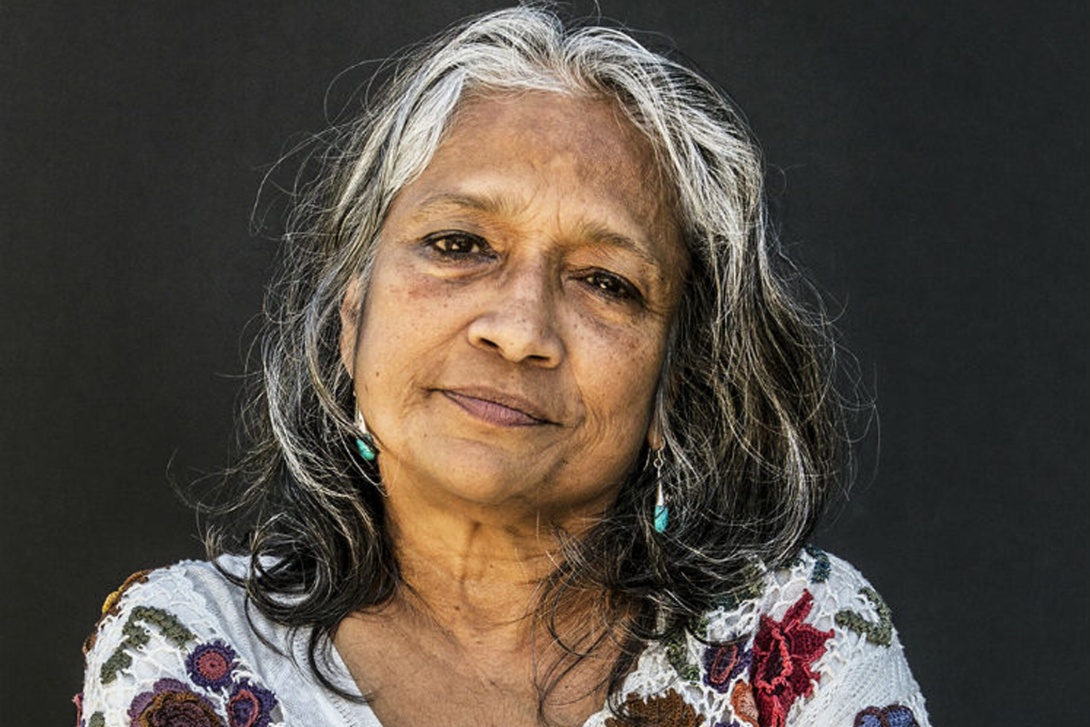
We discussed this with Naila Kabeer, Professor of Gender and Development at the London School of Economics, in the context of the digital revolution and the crisis of democracy – the key themes of the latest conference of the International Association for Feminist Economics (Iaffe), for which inGenere was a media partner.
Why is it important to talk about feminist economics today?
I think feminist economics has always been important, because economics itself is about all those activities and the resources that we have to have in order to live our lives, prosper, and plan for the future. But a lot of that thinking has been done as though the world is made up of only the activities that are done by men, while all the activities done by women – that are often unpaid – are either invisible or given less value. As a consequence, we have a very lopsided view of how the economy runs. What feminist economics brings to economics is the total view of everything that we do and need that can either help us prosper or that can hold us back.
Which are, in your opinion, the main challenges that feminist economics is currently facing, in the context of the digital revolution and the crisis of democracy – the main themes of Iaffe's last conference?
Of course today we are in very dangerous times. Digitalisation can be a force for the good or a force for the evil, but we need to take control of it, rather than letting it control us. Unfortunately, the people who are in charge of and control digital media and the digital revolution, are not always on our side. At the moment, I can see it doing more harm than good. And then, of course, this whole right-wing backlash that we have been talking about during the conference, a lot of that has been spread through social media: you can tell lies now and reach thousands of people, whereas in the past when you told lies you only reached the people who were there. So digitalisation, under the control of irresponsible corporations, has fed this kind of backlash against feminism. And of course there is a backlash, because we are challenging some of the deepest, most powerful and naturalised power structures in the world.
How feminist movements, including feminist economists, can transform the world economic system, improving the quality of people's lives and respecting planetary boundaries?
At the heart of the feminist movement – but perhaps more in some sections of feminist movements than others – has always been a desire for a fairer world. What we are now understanding, more and more, is that a fairer world can only be built on a sustainable planet – I have come late to the whole area of the environment and nature, because I was worrying about poverty in my research. But I have now realised how these aspects are bound up, and I think what feminist economists can do is to continue to do what they do, to try and understand the world analytically. But they need to feed that information to the larger feminist movements, so that they have the arguments to spread the message beyond the feminist movements, to all the other people who fight for social justice. We can no longer do it alone, you know: we need everybody there.
Do you think we could effectively overcome the myth of growth without rethinking the way we conceive gender, sexual growth and male and female behavior?
The myth of growth is entirely premised on taking for granted that the human race will be reproduced, and that nature can reproduce itself even while it is being plundered, exploited and taken advantage of. Overcoming the cult of growth means recognising and valuing the resources, people and activities that have been at the receiving end of growth, that have provided growth but never benefited from it. We want to put growth to one side, we want to prosper. I do not say that we should all become poor, nobody wants that; but we want to prosper in a way that is not built on the unpaid labour of people and on the unrecognised value of nature.
What future awaits us otherwise?
Today, more and more women who are recognising the price they are having to pay through their unpaid work are choosing not to reproduce. Italy is one of many other countries where more and more women either hire poorer women to do their unpaid work or chose not to have children. This is going to tilt the balance of the population towards a much older population – we will not be renewing ourselves. This is worrying, and I don't understand why it is taking so long for policy makers to acknowledge the importance of the reproductive work that women do with their daughters and their sons. But I think it is beginning to happen: Covid brought to the forefront of people's minds and consciousness how quickly women's unpaid work burdens multiplied because men's paid work had come to a halt. So who was picking up the slack? Men could not work, they could not halt, nobody could work, but you had to keep living and that essential work was being done on an unpaid basis, as always, by women.