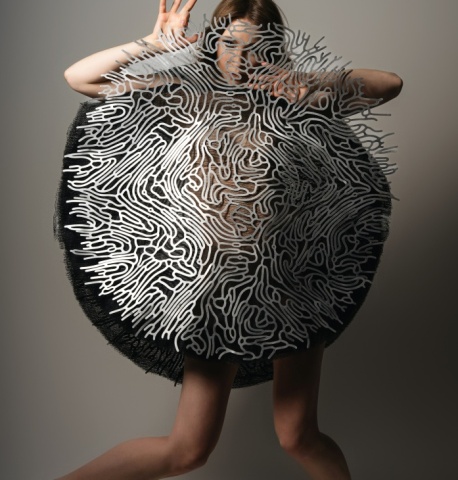
In Iran as in Palestine, women risk being turned into abstract symbols or narrative devices, rather than being recognised as active political subjects with their own histories, voices, and capacity for action. Challenging this dynamic also means questioning the role of international feminism as a political practice grounded in listening, amplifying voices, and building alliances. A conversation with Iranian journalist and activist Shora Esmailian

Today, to speak about Iran is to speak about a country at the centre of war, internal crisis, and a long history of resistance. In recent days, military escalation and regional tensions have further isolated the country, making it even harder to understand what is happening from within. The fragmentation of information and the overlap between armed conflict and internal repression have made the voices coming out of Iran rarer and more precious than ever.
Yet what is happening today did not emerge in a vacuum. For nearly fifty years, Iran has been shaped by recurring waves of protest. These are not sudden eruptions but long, stratified historical processes that resurface each time the promises of the 1979 revolution – freedom, equality, social justice – once again betray themselves.
And yet, in dominant Western narratives, these mobilisations are often framed as exceptional, isolated events, or reduced entirely to geopolitical calculations. The people protesting disappear, replaced by strategic analyses, state interests, and interventionist rhetoric. Iranian women, once again, risk being reduced to abstract symbols or narrative instruments, rather than being recognised as active political subjects with their own history, their own voice, and their own agency.
This simplification is not neutral. It is part of a gaze that reduces Iran to a permanent crisis and its struggles to passive reflections of external dynamics, erasing the continuity of internal resistance and the complexity of its demands.
To challenge this perspective also means questioning how international feminist solidarity is constructed in the West. Not as a projection of Western models of emancipation, nor as a symbolic or selective gesture, but as a political practice grounded in listening, amplifying local voices, and building horizontal alliances.
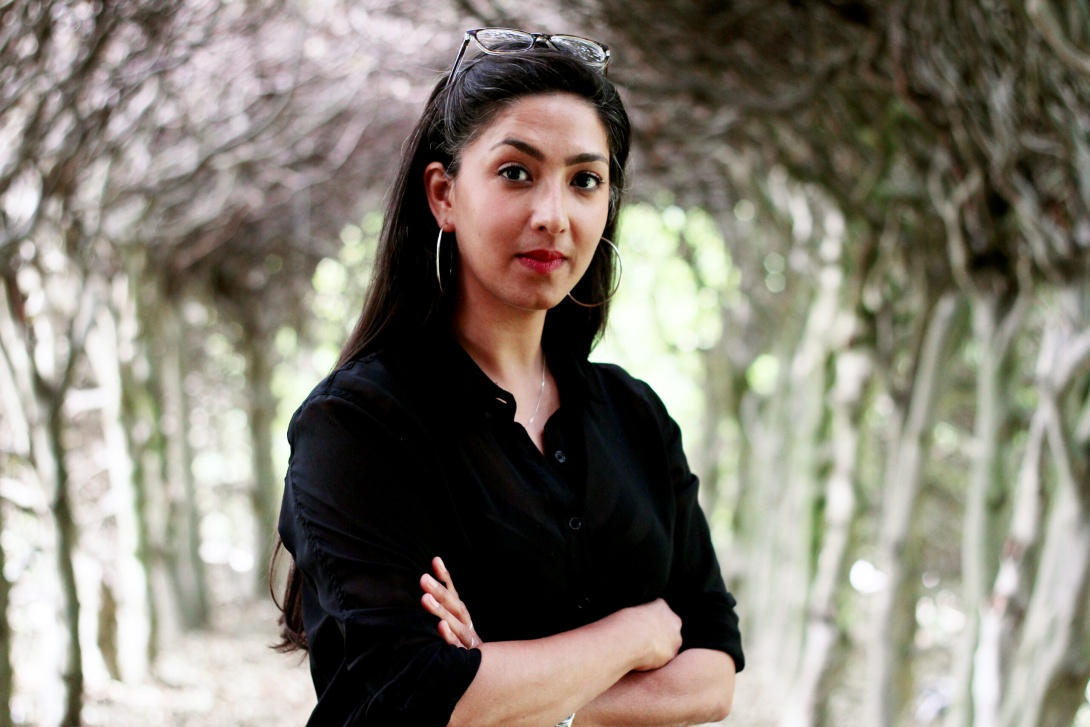
It is from this perspective that this conversation with Shora Esmailian takes shape. Esmailian is an Iranian journalist and activist based in Sweden. Her attention to struggles in Iran does not stem solely from current events. In the early 2000s, following extensive fieldwork in the country, she conducted a deep analysis of protest movements. Together with Andreas Malm, she published two books – one in Swedish and one in English – dedicated to that period. The volume Iran on the brink. Rising workers and threats of war (Pluto Press, 2007) reconstructs, in particular, the history of the labour and trade union movement, as well as student and feminist movements, showing how resistance in Iran is the result of long political and social continuity rather than isolated events.
At a moment marked by silences, selective narratives, and contradictory geopolitical positioning, this conversation attempts to shift the gaze – not to speak on behalf of, but to create space for voices from within Iran to be heard in their full complexity.
Today, Iran is facing an extremely critical moment, marked by military escalation and deep uncertainty, which makes it difficult to grasp what people are experiencing from within.
In the days before the United States and Israel attacked Iran, protests had begun again. For the first time since the Iranian regime's massacre of demonstrators in early January, people rose once more – and this time, the epicentre was the country's universities. Dressed in black and heavy with grief, students used the end of the forty-day mourning period as a window for continued struggle. On campus, they chanted that behind every slain comrade stand hundreds more, alongside slogans like "Woman, Life, Freedom" and "Free the political prisoners." Despite violent attacks by paramilitary forces, they did not give up. The protests continued for several days, until foreign bombs silenced them.
At a time like this, war risks overshadowing people's lives and voices...
Iran is not a homogeneous society – there are many different opinions. While some understandably celebrated that the United States and Israel killed the country's highest religious leader – a tyrant who had ruled for 37 years – this must not be mistaken for victory. Victory would only have been possible if the regime had fallen as a result of mass protests by the Iranian people. Only then could the "deep state" that constitutes the Islamic Republic have been dismantled. Only then would there have been a real chance to build a free and equal Iran. Imperialist interventions and bombs have rarely led to a people's liberation from their own despots – especially not in a country like Iran. More often, they function as a suffocating blanket over popular movements. We've seen this pattern repeatedly: from the Constitutional Revolution of 1905, to Prime Minister Mohammad Mossadegh's attempt to nationalise oil, and now again with today's wave of protests when the masses in Iran rise, the empire – whether Russia, Great Britain, or the United States – moves to silence them in order to install its own ally.
How would you describe the current situation in Iran beyond geopolitical narratives and what we see in Western media?
Now Iranians are forced to live under bombs, not knowing what the next day will bring, paying with their lives for the interests of the United States and Israel. Just look at the more than 165 schoolgirls killed, alongside all the other civilians dismissed as so-called "collateral damage". Popular mobilisation is not possible when bombs are falling overhead. We must demand an end to this war, now.
Beyond the war itself, many of the recent protests were also driven by economic conditions. Can you explain what has been fuelling that pressure?
Multiple forces are creating what I call a perfect storm. One is the sanctions regime, particularly strengthened under the last Trump administration, which has severely damaged the Iranian economy. Sanctions have not brought down the government. They have mainly harmed ordinary people. At the same time, Iran has a corrupt ruling class closely tied to the leadership of the Islamic Republic – what I sometimes call "millionaire mullahs." Over the last few decades, they have enriched themselves enormously. The gap between working people and the wealthy class has grown sharply. Then there is the long-term drought and catastrophic water mismanagement. Many people no longer have reliable access to water, and some cannot use their land anymore. When people say, "We want to be able to buy rice," they mean it literally. Prices can rise 150% overnight. Inflation is extremely high. COVID also deeply affected the country. So this moment is political, but it is also brutally material. People are demanding the minimum conditions for life.
In the West, we've seen huge mobilisations in support of Palestine. Many activists define themselves as anti-imperialist and anti-colonial – but solidarity with Iran can feel selective or silent. How do you read this tension?
I am pro-Palestine. I have been active in that movement for years, and my most recent book is about Gaza and the genocide. I was also deeply involved in the Women, Life, Freedom movement. For me, solidarity means standing with the oppressed. In Palestine, the oppressed are Palestinians living through occupation, apartheid, and genocide. In Iran, the oppressed are those fighting for freedom and equality, which is impossible under the Islamic Republic. At the same time, we must say no to external intervention: Mossad, Israel, the United States, or the Gulf states. Iranian history shows that foreign intervention repeatedly leads to disaster. During the 12-day war in June, many Iranian intellectuals and activists – even women activists inside Evin prison – clearly stated: "No to Israeli bombs. No to the Islamic Republic." These positions are not contradictory. The people of Iran – like the people of Palestine – must be able to decide their own future. Both movements have made mistakes by not coming together more intentionally. Our interests are aligned in a free, democratic, equal Middle East. That requires alliances rather than fragmentation.
In progressive spaces, there's often a struggle to criticise the Iranian regime while opposing imperialism. How do you navigate this – and what do you wish Western activists understood better?
Western governments remain silent about genocide in Gaza, yet are quick to condemn killings in Iran while proposing more sanctions, which hurt ordinary people. We need to return to a simple principle: listen to the oppressed. Listen to Palestinians calling for survival and decolonisation. Listen to Iranians demanding economic dignity, water, freedom of expression, and an end to dictatorship. We must also be cautious about amplifying exile networks that promote monarchist or reactionary politics under the banner of "regime change." Not every opponent of the regime represents progressive values. Revolution is a long process. In 1978-79, people were in the streets for a year before the Shah fell. Workers organised general strikes that brought the country to a standstill. We must be patient and amplify progressive voices rooted in people's lived demands.
What role does feminism play in Iranian resistance today – not as a Western label, but as a lived practice?
One of our tasks as progressive feminists in the West is to challenge instrumental mainstream feminism – the kind that suddenly "cares" about Iranian women while ignoring Palestinian women. When I read articles obsessing over Iranian women's bodies and hair, I feel disgust. It is an exoticising, orientalist gaze. Iranian women do not need white men to liberate us. We can do it ourselves.
And what does real international feminist solidarity look like?
Real solidarity means amplification. When Kurdish women chant "Woman, Life, Freedom," they are also naming minority oppression. When Baluch women protest – even wearing headscarves – they are also resisting drought, poverty, and state neglect. Iranian women are not a monolith. They come from different classes, ethnicities, and religious affiliations. Being Muslim does not mean one cannot be feminist – and suggesting otherwise feeds European Islamophobia. Solidarity means listening carefully, amplifying progressive voices, and refusing to instrumentalise women's struggles for geopolitical agendas. The Islamic Republic must fall, but the future of Iran belongs to its people.