According to the indian feminist Priti Darooka the W20 hosted in Berlin felt like a European meeting: the South really did not have a place to be seen or heard and there was no conversation about poverty, structural causes of inequalities, livelihoods, women farmers, women’s work in the informal economy
feminism
1st November 2015 “re-run” elections in Turkey and the role of gender in the process
Gender cannot be isolated. Gender interconnects, intermingles, intersects, with other social divisions, such as ethnicity and class. Hence the term, intersectionality
Resolution signed by more of 135 delegates at 24th Annual Conference of International Association for Feminist Economics (July 16-18, 2015) as personal expression of concern
Recent Turkish elections saw radical changes in parliament composition opening a new political season. Feminists and LGBT activists played a fundamental role in this renewal
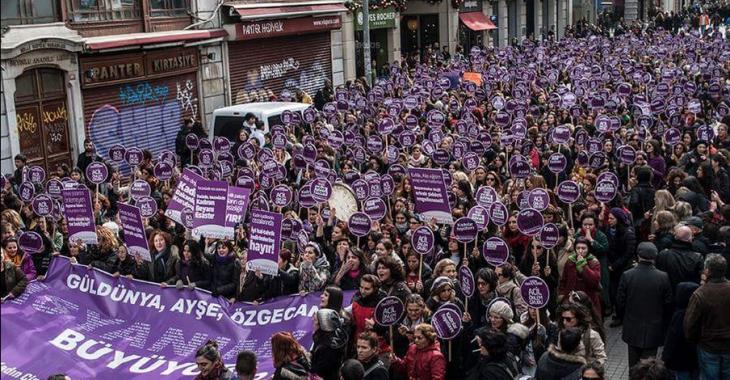
The reactions to the discovery of Özgecan Aslan’s body, and President Erdogan's statements about gender-sensitive moral issues show how gender today is framed in Turkey. But what kind of gender trends has Turkey really witnessed in the last decade?
Changing the narratives and practices of living the crisis is fundamental to challenge this historical moment and turn it all around from disgracefull to fruitfull. Stepping out capitalocentrism means valuing everyday relationship-based-strategies of informal economics put in place to survive the global crisis, which could lead to social change.
Women tend to use creative and non-violent political practices that look at scenarios for peace yet to be invented, questioning the boundaries and narratives of the occupation
Women have been the protagonists of many pacifist initiatives carried out jointly between Israel and Palestine. In the last years many of these initiatives have failed. A reflexion about successes and failures